
By Jillian F. Hayes, Esq. · Last updated May 20, 2026
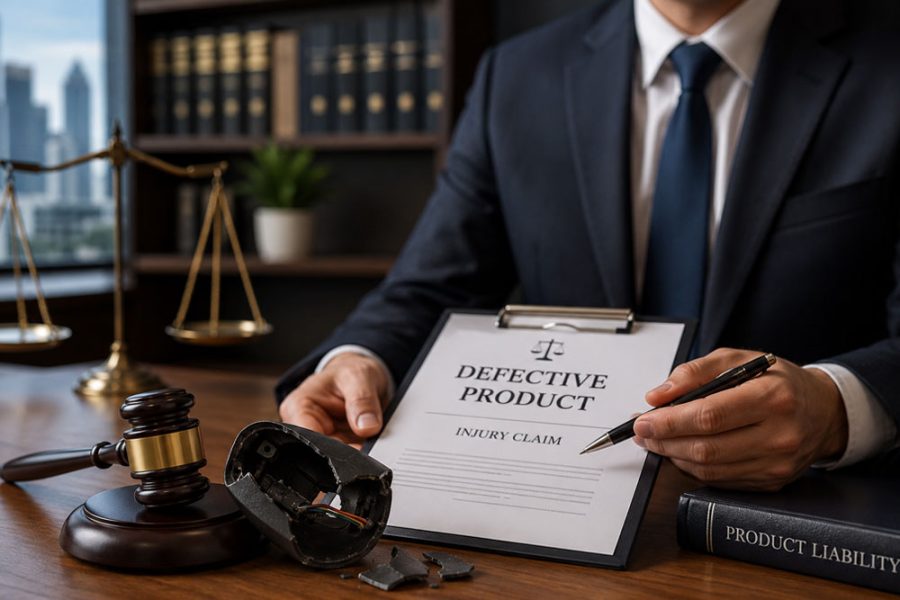
A product liability lawyer in San Diego is an attorney who represents people injured by defective, dangerous, or improperly marketed products. Under California's strict liability doctrine, established in Greenman v. Yuba Power Products in 1963, an injured consumer does not have to prove the manufacturer was negligent. They only have to prove the product was defective and that the defect caused the injury. The statute of limitations for filing is two years from the date of injury under California Code of Civil Procedure Section 335.1. Hayes Law represents clients across San Diego County in claims involving defective consumer goods, auto parts, medical devices, and e-commerce products.
Injured by a defective product? Get a free case evaluation. No fee unless we win.
Schedule a Free ConsultationWhat Is Product Liability Law and How Does It Work in California?
Product liability is the area of law that holds manufacturers, distributors, and sellers responsible when a defective product injures someone. California is one of the most consumer-friendly states in the country for these claims. That reputation traces back to a single 1963 California Supreme Court decision.
In Greenman v. Yuba Power Products, the court ruled that a manufacturer is strictly liable when a product it places on the market causes injury, even if the manufacturer was careful in making it. That principle has been California law ever since. It is reflected in California Civil Code Section 1714 and in the pattern jury instructions courts use today (CACI 1200 series).
There are three legal theories a San Diego attorney can use to bring a product liability claim:
| Theory | What You Must Prove | When It's Used |
|---|---|---|
| Strict Liability | The product was defective and the defect caused injury. No need to prove negligence. | Most consumer product cases. The default theory in California. |
| Negligence | The manufacturer failed to exercise reasonable care in design, manufacture, or warning. | When strict liability doesn't fit, or as a parallel theory. |
| Breach of Warranty | The product failed to perform as expressly or implicitly promised. | Express warranty cases. Cases involving commercial buyers. |
Most San Diego product liability lawsuits are filed under all three theories at once. That way, if a court rejects one, the others remain. The strict liability claim is usually the strongest because the burden of proof is lighter.
What Are the 3 Types of Product Defects That Create a Legal Claim?
California recognizes three categories of product defect. A claim has to fit into at least one of them. The framework comes from the 1978 case Barker v. Lull Engineering, which set out the design defect tests still used today.
- Design defect. The product was designed in a way that makes it unreasonably dangerous, even when manufactured correctly. The Pinto fuel tank cases from the 1970s are the classic example. Every Pinto with that fuel tank design carried the same risk. In Barker, California adopted two tests for design defect: the consumer expectations test and the risk-benefit test.
- Manufacturing defect. The product's design was fine, but something went wrong on the assembly line and a particular unit came out dangerous. A car seat with a missing bolt. A medication batch contaminated with the wrong chemical. The defect exists in some products coming off the line, not all.
- Marketing defect (failure to warn). The product is unavoidably dangerous when used as intended, and the manufacturer failed to warn consumers about that danger. Prescription drugs with undisclosed side effects fall into this category. So do power tools sold without adequate safety instructions.
Some cases involve more than one defect type. A defective lithium battery, for instance, often involves both a manufacturing defect (the cells fail at random) and a failure to warn (the manufacturer knew about the failure rate and did not disclose it).
When Should You Call a Product Liability Lawyer in San Diego?
The honest answer is sooner than most people do. Evidence disappears. Witnesses forget. The two-year statute of limitations runs whether you have an attorney or not. Here are the five scenarios where calling Hayes Law makes sense:
- You were injured by a consumer product and needed medical treatment. ER visits, urgent care, surgery, ongoing therapy. If the injury was severe enough to involve a doctor, a product liability evaluation is worth a free consultation.
- The product caused property damage in addition to injury. A house fire from a defective appliance. A car crash from a tire blowout. These cases often involve multiple defendants and large damages.
- You discovered the product was recalled after your injury. CPSC, NHTSA, or FDA recalls are strong evidence of a known defect. The recall itself is admissible.
- An insurance adjuster is offering a quick settlement. Manufacturers' insurers move fast when they think a case has value. A settlement offered in the first 30 days is almost always lower than the case is worth.
- The injury involved a child. Children's product cases have additional statute of limitations protections under California law, but acting early still matters for evidence preservation.
If you've been injured by a defective product in San Diego, you should contact an attorney within a few weeks of the injury at the latest. California's statute of limitations is two years from the date of injury under CCP Section 335.1. Some claims, like those involving children or latent defects, have longer windows. None of them benefit from delay.
Not sure if you have a case? Talk to a San Diego product liability attorney before the evidence trail goes cold.
Get a Free Case ReviewWho Can Be Held Liable for a Defective Product in California?
California's strict liability doctrine reaches every commercial entity in the chain of distribution. That's broader than most consumers expect. A claim can be brought against any of the following:
- The manufacturer. The company that designed and built the product. This is usually the deepest pocket and the primary defendant.
- The component manufacturer. If the defect is in a specific part (a battery, a microchip, a valve), the company that made that component can be liable separately.
- The distributor or wholesaler. Anyone who handled the product on its way from manufacturer to retailer.
- The retailer. The store or website that sold the product to the consumer. This matters when the manufacturer is overseas or judgment-proof.
- The importer. For products manufactured outside the United States, the importer is treated as the manufacturer for liability purposes.
E-commerce platforms changed this analysis significantly. In Bolger v. Amazon.com, decided by the Fourth District Court of Appeal in 2020, California courts held that Amazon can be strictly liable for defective products sold by third-party sellers on its marketplace when Amazon controlled the listing, storage, and shipment. The Loomis v. Amazon.com decision in 2021 confirmed and extended that ruling. If you were injured by a product purchased on Amazon, the platform itself is a potential defendant. We covered the Amazon question in detail in a separate post.
What Compensation Can You Recover in a San Diego Product Liability Case?
California allows recovery for both economic and non-economic damages in product liability cases. The amounts depend on the severity of the injury, the conduct of the defendant, and the specifics of the case.
Economic damages cover financial losses you can document:
- Past and future medical expenses
- Lost wages and lost earning capacity
- Property damage caused by the product
- Out-of-pocket costs (medication, equipment, transportation to appointments)
Non-economic damages cover losses without a receipt:
- Pain and suffering
- Emotional distress
- Loss of enjoyment of life
- Disfigurement and scarring
- Loss of consortium (for a spouse)
In cases where the manufacturer acted with malice, oppression, or fraud, California Civil Code Section 3294 allows for punitive damages. Punitive awards are intended to punish the defendant and deter similar conduct. They are not common but they can be substantial when warranted, especially when internal company documents show the manufacturer knew about the defect and concealed it.
Settlement values for San Diego product liability cases vary widely. Minor injury cases may settle for under $50,000. Catastrophic injury cases involving spinal cord damage, traumatic brain injury, burns, or wrongful death routinely reach seven and eight figures. Every case turns on its own facts. EST. ranges in this post are general industry figures, not promises about your case.
How Does Hayes Law Handle Product Liability Cases in San Diego?
Hayes Law works on contingency. There is no fee for the initial consultation, no upfront cost to file the case, and no attorney fee unless we recover money for you. The percentage and details are explained in writing before any retainer is signed.
The case process generally follows this sequence:
- Free consultation. We review the facts, the product, the injury, and the medical records. If we don't see a viable case, we tell you that.
- Investigation. We preserve the product, photograph the scene, gather medical records, identify potential defendants, and (when warranted) bring in a product engineer or biomechanical expert to analyze the defect.
- Demand letter. Before filing suit, we typically send a demand letter to the manufacturer's insurer outlining the claim. Some cases resolve at this stage.
- Filing the lawsuit. If pre-suit negotiations fail, we file in the appropriate California superior court or federal court.
- Discovery. Depositions, document requests, expert designations. This is where most of the case work happens.
- Settlement or trial. Most product liability cases settle. The ones that go to trial usually involve disputed liability or aggressive defense from the manufacturer.
Hayes Law has handled product cases involving defective consumer goods, Amazon marketplace products, lithium batteries, and household products with chemical exposures. Our practice focuses on California state and federal courts.
Frequently Asked Questions About Product Liability in San Diego
- How long does a product liability case take in California?
- Most cases resolve in 12 to 36 months. Pre-suit settlements can close in 6 to 12 months. Cases that go to trial typically run 24 to 36 months from filing to verdict.
- Do I need to keep the defective product as evidence?
- Yes. Preserve it in the exact condition it was in at the time of injury. Don't clean it, repair it, modify it, or throw it away. Loss of the product can be catastrophic for the case under California's spoliation doctrine.
- What if I was partially at fault for my injury?
- California uses pure comparative fault. You can recover even if you were 99 percent at fault, but your recovery is reduced by your percentage of fault. A jury that finds you 30 percent at fault on a $100,000 case results in a $70,000 award.
- What is the statute of limitations for product liability in California?
- Two years from the date of injury (CCP Section 335.1). Wrongful death claims run from the date of death. Discovery rule exceptions can extend the deadline when the injury or its cause wasn't immediately known.
- How much does a product liability lawyer cost in San Diego?
- Most work on contingency, taking 33 to 40 percent of any recovery. There's no upfront fee. If we don't recover money for you, there's no attorney fee.
- Can I sue if the product had a warning label?
- Often yes. A warning label doesn't automatically shield the manufacturer. The warning has to actually communicate the specific danger that caused injury and be reasonably clear. Inadequate warnings are themselves a basis for liability under California law.
- What evidence do I need for a product liability claim?
- The product itself, photographs, medical records, proof of purchase, original packaging and instructions, witness contact information, and any communications with the manufacturer. Expert analysis is usually required to prove the defect.
- Can I sue the retailer or only the manufacturer?
- Under California strict liability law, every entity in the chain of distribution is potentially liable, including manufacturer, distributor, and retailer.
Ready to talk to a San Diego product liability attorney? Hayes Law offers free, confidential consultations.
Get a Free Case ReviewAbout the Author: Jillian F. Hayes is a San Diego attorney whose practice focuses on product liability and personal injury law. She represents individuals and families across San Diego County and Southern California in defective product cases, including consumer goods, e-commerce purchases, and component failures. This article is for general information only and is not legal advice. Speaking with an attorney about your specific situation is the only way to know what your rights and options are.